
 EN
EN

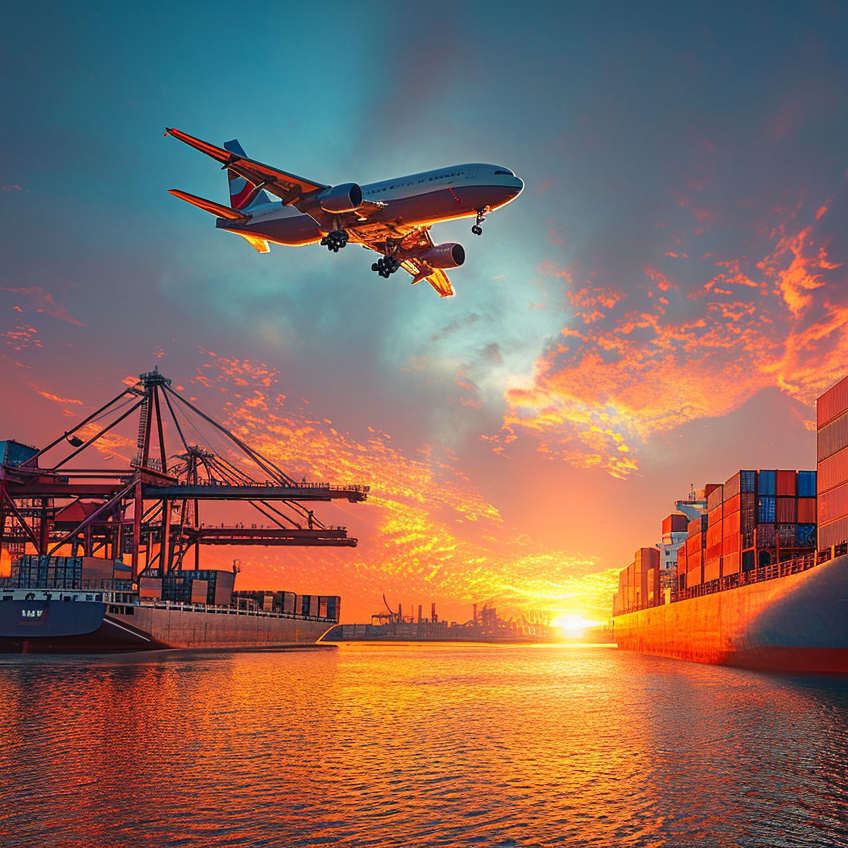
Speed-to-Market: How FBA Air Freight Optimizes Inventory Flow and Seasonal Readiness
Sub-7-Day Transit to FBA Warehouses Enables Rapid Replenishment Cycles
Amazon's FBA air freight service gets products from all over the world into US warehouses in less than seven days. This lets sellers keep their safety stock around 45% lower without losing out on Prime benefits or falling behind competitors for the buy box. The fast delivery really matters when demand spikes unpredictably, say during Prime Day events or busy holiday seasons. Sellers who restock within Amazon's performance timelines avoid getting penalized in rankings. International sellers benefit too from this just-in-time approach. They end up tying up about 65% less money in extra inventory sitting around waiting to sell. Cash flows match what actually sells rather than relying on sometimes wrong guesses about future demand.
Accelerated Inventory Turnover and Real-Time Response to Amazon Demand Spikes
Air freight makes inventory turn over about 8 times quicker compared to shipping by sea. This means when something goes viral online or shows up in search algorithms, products can get shipped out almost instantly. Last holiday season, sellers who used FBA air shipping managed to fill around 90% more orders inside Amazon's two day delivery promise for Prime members. They basically turned those top spots in search results directly into cash without running out of stock and getting penalized. The time goods spend sitting in warehouses drops too, which cuts down on those expensive storage charges. And having items available consistently helps maintain good seller ratings and keeps customers coming back naturally over time.
Cost Efficiency at Scale: When FBA Sea Freight Maximizes Margins Without Compromising Reliability
FCL vs LCL Ocean Rates Compared to Air Options — Total Landed Cost per Unit
For companies dealing with large volumes of FBA inventory, sea freight still stands out as the budget-friendly option. When shipping containers are fully loaded (FCL), businesses get set rates that work well when cargo exceeds 15 cubic meters. On the flip side, partial loads (LCL) charge based on space used, typically between 2 to 15 CBM for smaller shipments. Looking at real world data from logistics experts, switching to FCL can cut down individual item costs anywhere from 20% to 30% compared to LCL options. And let's not forget about air freight which tends to break the bank costing roughly four times what sea transport would for each kilogram shipped. These differences really add up over time for regular shippers.
| Method | Cost Basis | Best For |
|---|---|---|
| FCL | Fixed container fee | Shipments >15 CBM |
| LCL | Per CBM | Shipments 2–15 CBM |
| Air | Per kg | Urgent replenishment (<7 days) |
Total landed cost includes origin handling, freight, duties, and final-mile delivery. Sea freight’s stability supports precise margin modeling—essential when scaling FBA operations across multiple ASINs and geographies.
Identifying the Break-Even Volume Threshold for FBA Replenishment Decisions
The break-even point—where sea freight’s cost savings outweigh air’s speed advantage—depends on product value, storage fees, and transit duration. Use this formula:
(Air Cost per Unit − Sea Cost per Unit) × Units Shipped > Holding Costs During Sea Transit
For example:
- Air costs $5/unit; sea costs $1.50/unit — $3.50/unit delta
- Shipping 1,000 units saves $3,500 via sea
- If Amazon’s monthly storage fee is $24/m³ and sea transit adds 30 days, total holding cost must be under $3,500 to justify sea freight
Typically, shipments exceeding 2 CBM reach break-even. High-volume sellers apply sea freight to stable-demand SKUs year-round, reserving air for seasonal peaks or top-performing ASINs requiring rapid restock.
End-to-End FBA Integration: How Forwarding Partners Streamline Compliance, Visibility, and Amazon Workflow Alignment
Seamless SPN Coordination, Pre-Advisory Submission, and FBA Labeling Automation
Freight forwarders who specialize in e-commerce have become pretty embedded within Amazon's Seller Partner Network (SPN). These companies align their logistics operations with what Amazon needs from sellers right before goods leave the warehouse. Most good forwarders send advance shipping notices at least three days before containers reach ports, which helps make sure all the paperwork lines up with how Amazon wants products received at their fulfillment centers. When it comes to labeling, automation makes a big difference. Systems apply those standard GS1 barcodes while shipments are still on the move, reducing mistakes during receiving by around two thirds compared to when people do it manually. The best platforms offer real time tracking so sellers can see exactly where containers are via GPS, along with when they'll likely arrive at Amazon warehouses. Compliance features built into these systems handle things like proper packaging requirements, safety warnings for small parts, and other preparation standards that Amazon demands. This kind of integration cuts down on delays at customs by about 40%, meaning products get ready for sale much faster than traditional methods allow.
Risk Mitigation Through FBA-Optimized Customs Clearance and Documentation Accuracy
Customs clearance is a leading cause of FBA supply chain disruption—delays of 8–14 days due to incomplete paperwork or tariff misclassification directly trigger stockouts and missed sales windows. FBA-optimized forwarders mitigate risk through three integrated safeguards:
- Automated document validation, cross-checking commercial invoices against Harmonized System (HS) codes
- Pre-emptive duty calculations, powered by real-time trade agreement databases
- SPN-integrated workflows, auto-generating Amazon-compliant labels and manifests
These practices reduce customs hold rates by 40% and eliminate discrepancies between physical cargo and digital records. The result is faster warehouse intake and avoidance of $5,000+ per-shipment penalty risks.
| Risk Factor | Standard Process | FBA-Optimized Approach |
|---|---|---|
| Documentation Errors | Manual checks (15–20% error rate) | AI-powered validation (<2% error rate) |
| Tariff Misclassification | Broker-dependent accuracy | HS code libraries synced with Amazon requirements |
| Label Non-Compliance | Post-rejection corrections | Pre-arrival FBA label generation |
This proactive model transforms customs from a bottleneck into a strategic enabler—freeing audit capacity for growth initiatives while ensuring predictable, compliant throughput.
FAQ Section
What is FBA air freight and how does it benefit sellers?
FBA air freight is Amazon's service that allows products to be quickly delivered to warehouses, enabling faster restocking for sellers and helping them reduce safety stock and maintain Prime benefits.
How does air freight compare to sea freight in terms of inventory turnover?
Air freight accelerates inventory turnover by up to eight times versus sea freight, allowing products to be shipped rapidly in response to demand spikes.
What are the cost differences between FCL and LCL options in sea freight?
FCL offers fixed rates for fully loaded containers, cost-effective for shipments over 15 CBM, whereas LCL charges per CBM for smaller loads, typically 2 to 15 CBM.
How can sellers determine the break-even point for choosing air or sea freight?
Sellers can use the break-even formula considering unit costs, shipping volume, and storage fees to identify when sea freight's cost savings outweigh air freight's speed advantage.
What is the role of freight forwarders in Amazon's supply chain?
Forwarders streamline compliance and logistics by coordinating with Amazon's SPN, handling paperwork, labeling, and tracking to ensure timely and accurate shipment.
How do FBA-optimized solutions mitigate customs clearance risks?
Such solutions automate document validation, pre-emptively calculate duties, and integrate SPN workflows, reducing customs delays and ensuring compliance.
Table of Contents
- Speed-to-Market: How FBA Air Freight Optimizes Inventory Flow and Seasonal Readiness
- Cost Efficiency at Scale: When FBA Sea Freight Maximizes Margins Without Compromising Reliability
- End-to-End FBA Integration: How Forwarding Partners Streamline Compliance, Visibility, and Amazon Workflow Alignment
- Risk Mitigation Through FBA-Optimized Customs Clearance and Documentation Accuracy
-
FAQ Section
- What is FBA air freight and how does it benefit sellers?
- How does air freight compare to sea freight in terms of inventory turnover?
- What are the cost differences between FCL and LCL options in sea freight?
- How can sellers determine the break-even point for choosing air or sea freight?
- What is the role of freight forwarders in Amazon's supply chain?
- How do FBA-optimized solutions mitigate customs clearance risks?